 Rumor & Record
Bermuda
Triangle
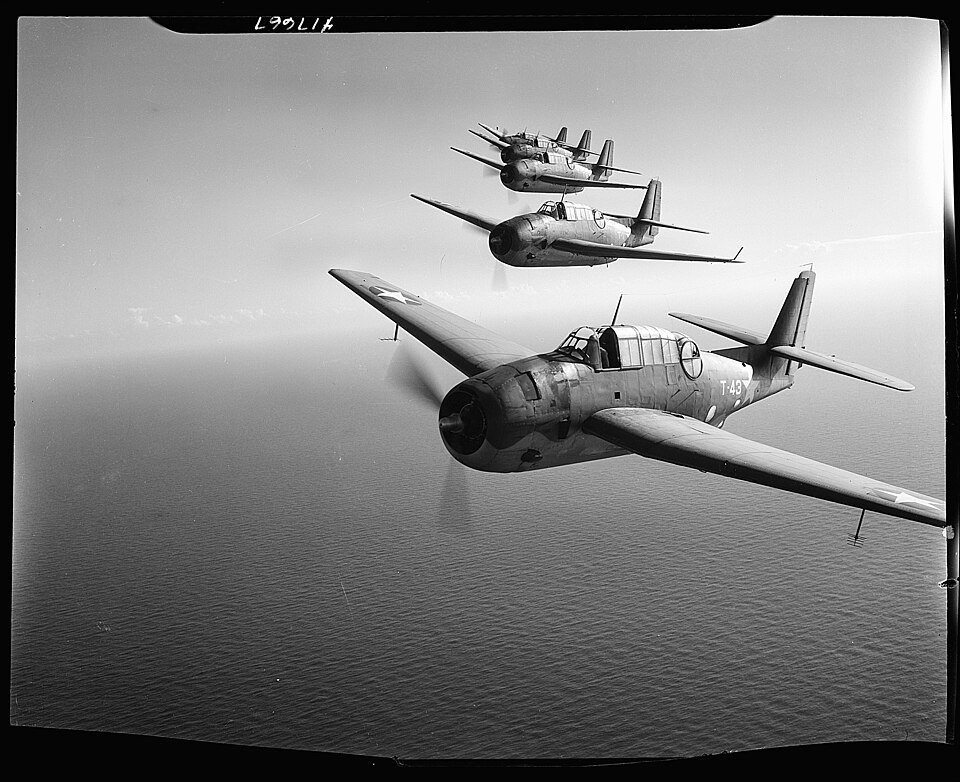
On a December afternoon in 1945, five Navy bombers took off from Fort Lauderdale on a routine training flight. Two hours later the flight leader radioed that both his compasses were out. By nightfall the five planes were gone, along with . Twenty-seven men disappeared, and a legend was born.2
Follow the search
Stop 1 of 5Where Flight 19 took off, where its leader thought he was, and where the night's losses happened. Tap a pin or step through in order.
Sketch only, not to scale. Positions are approximate, from the Navy's history of Flight 19.2
Five planes, one radio
Flight 19 was a training mission: five TBM Avenger torpedo bombers, six Navy men and eight Marines. The plan was a triangle-shaped navigation exercise, east to the Bahamas for practice bombing, then north, then home.2
Its leader, Lieutenant Charles Taylor, was an experienced pilot with more than 2,500 flight hours. It was his first time leading this route.2
Around 3:40 p.m., when the flight should have turned, things went wrong. Taylor radioed: "Both my compasses are out and I am trying to find Fort Lauderdale, FL." He said he was sure he was over the Florida Keys. Radio bearings later suggested he was far to the northeast, over the open Atlantic.2
His last garbled message warned that when the first plane dropped below ten gallons of fuel, "we all go down together."2
The rescue plane
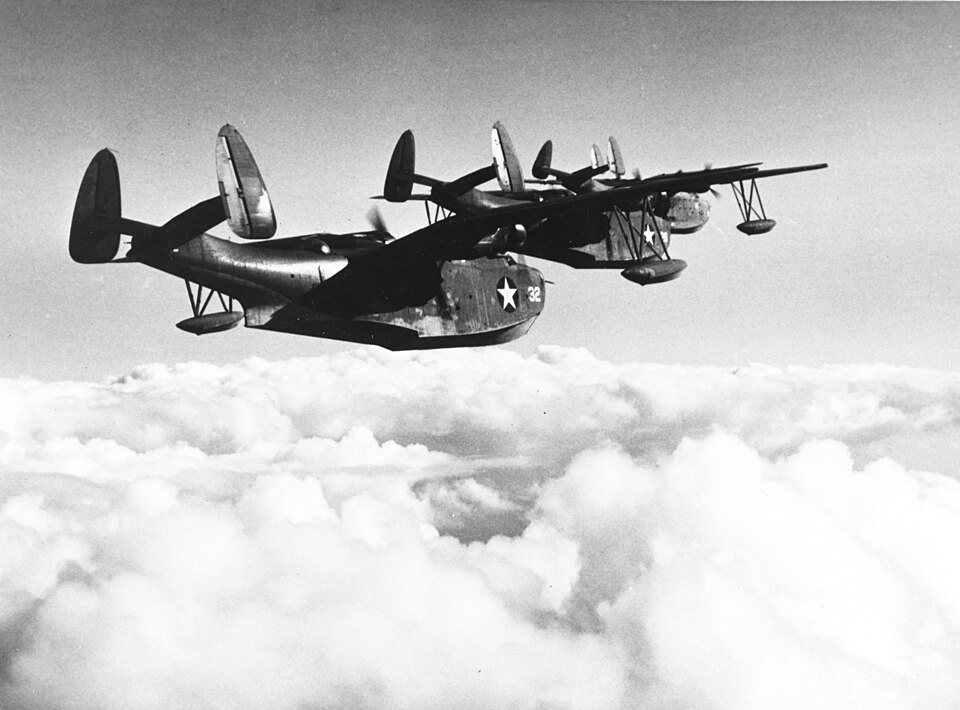
That evening, a PBM Mariner flying boat took off to search for the bombers, with 13 men aboard. At 7:30 p.m. it made a radio call. It was never heard from again.2
At 7:50 p.m., the crew of the tanker SS Gaines Mills saw "a burst of flames, apparently an explosion, leaping flames 100 feet high," off the Florida coast. A Navy carrier tracking the Mariner on radar watched it disappear in the same area.2
Mariners had a known problem: gasoline fumes could build up inside them. The Navy's questions pointed toward a fire caused by fumes.2
A legend gets a name
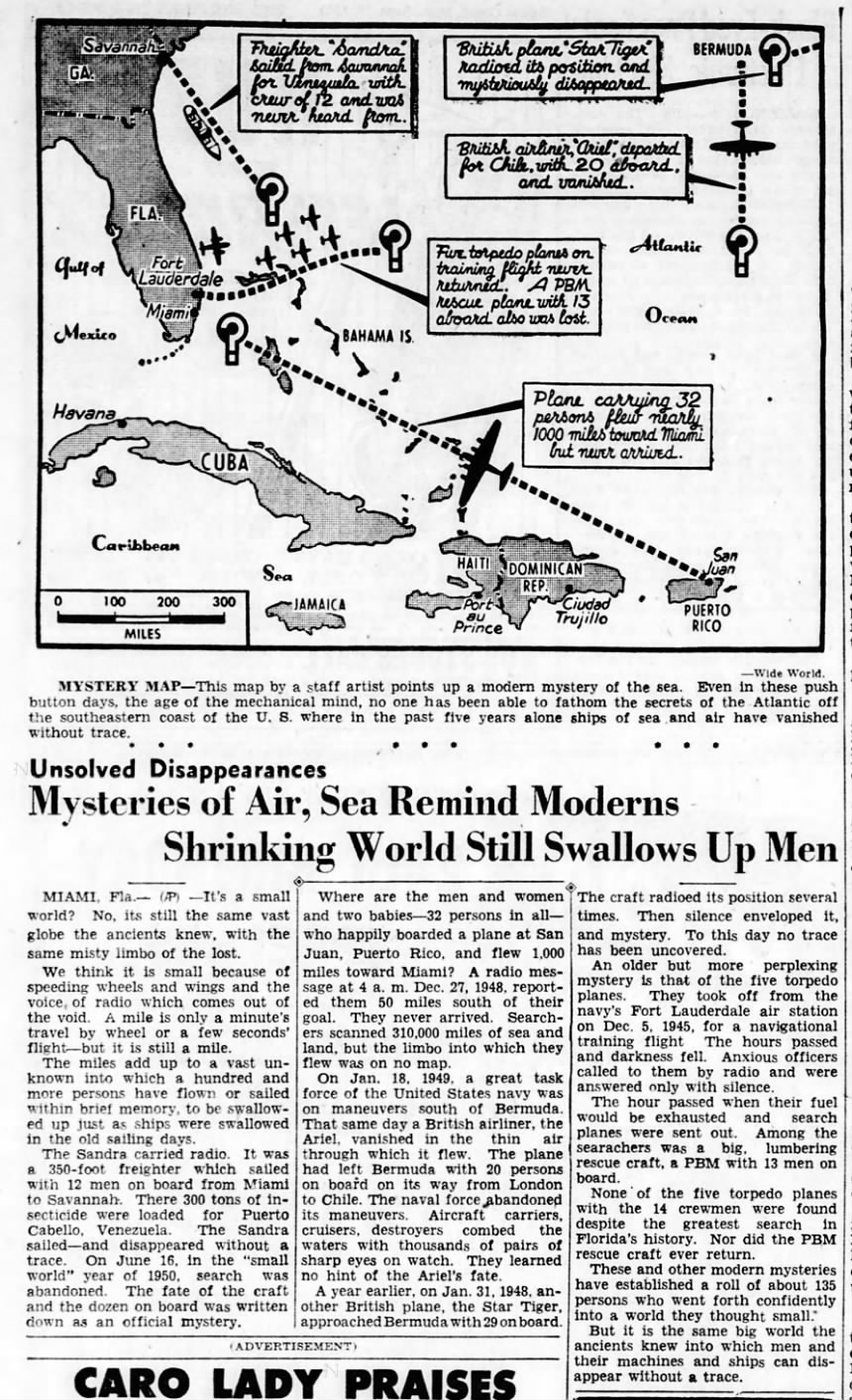
For years, the losses were just losses. Then, in 1950, an Associated Press story suggested a pattern of strange disappearances off Florida. A 1952 magazine article sketched a triangle between Florida, Bermuda and Puerto Rico.1
In February 1964, writer Vincent Gaddis gave it a name in Argosy magazine: "The Deadly Bermuda Triangle." Charles Berlitz's 1974 bestseller, The Bermuda Triangle, made it world famous.1
In 1975, a librarian named Larry Kusche went back to the original records. In The Bermuda Triangle Mystery: Solved, he reported that many famous cases left out storms, happened far outside the triangle, or never happened as described. One "disappearance" was a plane that crashed in front of hundreds of witnesses.1
The ship that went first
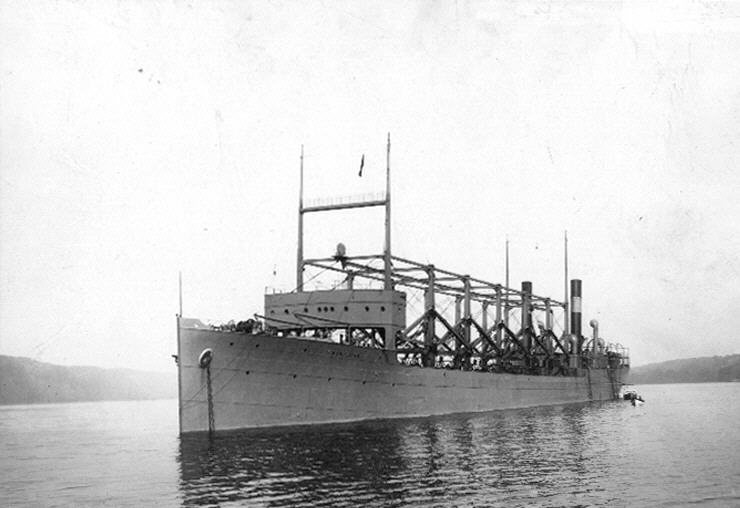
The biggest loss came long before the legend. In March 1918, the Navy collier USS Cyclops left Barbados for Baltimore, loaded with manganese ore, with 306 people aboard. It never arrived and sent no distress call.1
It remains the largest loss of life in U.S. Navy history not caused by combat. The most likely explanation is that the overloaded ship broke apart.1
The timeline
- THE LOSSES
- Mar 1918USS Cyclops leaves Barbados with 306 aboard. It is never seen again.
- Dec 5, 19452:10 p.m.: Flight 19 takes off from Fort Lauderdale.
- 3:40 p.m.The flight is due to turn. Its leader reports both compasses out.
- 7:50 p.m.A tanker sees an explosion where the search plane was last tracked.
- Jan 30, 1948The airliner Star Tiger disappears on its way to Bermuda.
- Jan 17, 1949Star Ariel disappears after leaving Bermuda.
- THE LEGEND
- Sep 1950An AP story first suggests a pattern of disappearances.
- Feb 1964Argosy magazine names "The Deadly Bermuda Triangle."
- 1974Charles Berlitz's bestseller, The Bermuda Triangle.
- 1975Larry Kusche publishes The Bermuda Triangle Mystery: Solved.
- 2010NOAA: no evidence of more disappearances here than elsewhere.
 Host
"Too many, too clean"
Ships sink everywhere. But whole squadrons don't vanish everywhere. Flight 19's leader had 2,500 hours in the air, and he lost track of where he was on a clear afternoon. Then the plane sent to save them disappeared too. The Navy's own board admitted: "We are not able to even make a good guess as to what happened."2
And it keeps happening. A 306-person ship with no distress call.1 Two airliners from the same airline, less than a year apart, either side of Bermuda.1 Maybe there's a natural explanation. But when the experts themselves can't explain it, it's fair to say we don't know what's out there.
 Host
"Busy water and bad weather"
The triangle covers some of the busiest sea and air lanes in the world, plus hurricanes and the Gulf Stream, which can carry wreckage far from where it went down. NOAA says there's no evidence that things disappear there more often than in any other busy stretch of ocean, and the Navy and Coast Guard say there's nothing supernatural about the losses.3
Look closely at the famous cases and they come apart. Flight 19 was lost and out of fuel at night over a rough sea. The search plane belonged to a type known for fuel-vapor fires, and a ship saw it explode.2 Kusche found storms left out of the stories.1 The mystery mostly lives in the retelling.
Rex and June are characters written for this site and appear in every file. They are not real people. Their arguments come from the sources listed below.
The Navy changed its verdict
The Navy's first inquiry blamed Flight 19's leader. It said he had become so confused he "suffered something akin to mental aberration."2
His mother fought the finding with a lawyer. The Navy reviewed it, found an injustice in his record and cleared him. The official cause was changed to unknown.2 That word, written to protect one pilot's name, has fed the legend ever since.
What's behind the Bermuda Triangle?
On film
Videos about this file from other creators, picked to show more than one side. Tap a tape to play it.
Videos are made by their channels, not by Rumor & Record, and reflect their creators' views. They load from YouTube only when you tap play.
The file
Common questions
Where is the Bermuda Triangle?
A loosely defined area of the Atlantic, usually drawn between Miami, Bermuda and San Juan, Puerto Rico. Its boundaries vary from writer to writer, and it is not an official place name.
What happened to Flight 19?
Five Navy bombers became lost on a training flight on December 5, 1945, and are believed to have run out of fuel and gone down at sea. A search plane was lost the same night, probably in an explosion.
Do more ships disappear in the Bermuda Triangle?
No evidence shows that. NOAA says disappearances don't happen there more often than in other heavily traveled parts of the ocean.
Who named the Bermuda Triangle?
Writer Vincent Gaddis, in a February 1964 article in Argosy magazine called "The Deadly Bermuda Triangle."
Other open files
Sources
- Bermuda Triangle (Wikipedia)
- H-057-4: The Disappearance of "Flight 19" and "Training 49" (Naval History and Heritage Command)
- What is the Bermuda Triangle? (NOAA National Ocean Service)
Satoshi Nakamoto
Someone invented Bitcoin, wrote under a made-up name for two years, then vanished and left a fortune untouched. Who?
Open file 077Photo credits: Navy torpedo bombers near Fort Lauderdale, Horace Bristol (public domain); PBM Mariners, U.S. Navy (public domain); 1950 AP article (public domain); USS Cyclops, New York Navy Yard (public domain). Full list on the credits page.