 Rumor & Record
MEMORANDUM / FILE 096
Operation
Paperclip
In May 1945, as Nazi Germany collapsed, the man who built Hitler's V-2 rocket rode up to American soldiers in Austria and surrendered. Soon he was working for the U.S. Army in Texas. Twenty-four years later, his rocket .3
Declassify the order
0 of 6 declassifiedIn August 1946, the State Department asked President Truman to approve a bigger version of Paperclip. He wrote "Approved" in the margin. These lines are exact. We blacked out key words. Tap each bar to declassify it.
THE MEMO. I am presenting for your approval a statement of United States policy on the interim of selected German and Austrian specialists in the United States.
THE MEMO. Since shortly after V–E Day the War Department has operated a project known as “Paperclip,” under which selected German scientists have been brought to this country .
THE MEMO. There remains in our zones of Germany and Austria a number of specialists whose knowledge and ability could be used .
THE MEMO. It is contemplated that at a later date selected persons would be granted .
THE POLICY, 2.a.(1). The specialists so brought to the United States, exclusive of families, will not exceed in number at any time.
THE POLICY, 2.a.(5). No person found by the Commanding General, USFET, to have been a member of the Nazi Party and more than a nominal participant in its activities, shall be brought to the U.S. hereunder.
Source: Foreign Relations of the United States, 1946, Volume V, document 448, with its enclosure, U.S. Department of State. A U.S. government document in the public domain.2
The race for German brains
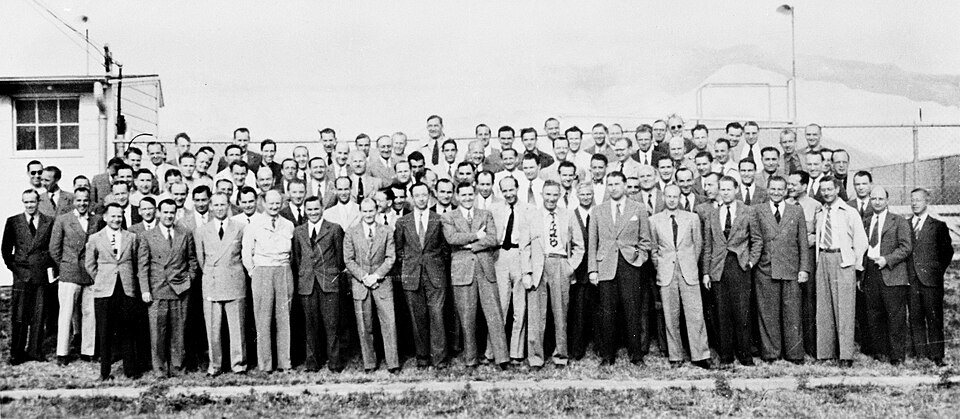
In 1945, Germany had the world's most advanced rockets. The V-2 was the first long-range ballistic missile, and the U.S. and the Soviet Union both wanted the people who built it.5
On May 2, 1945, Wernher von Braun, the V-2's technical leader, surrendered to American forces in Austria. His brother Magnus walked up to a soldier and said, "We want to surrender."3
On July 20, 1945, the Joint Chiefs of Staff created Operation Overcast, "to assist in shortening the Japanese war and to aid our postwar military research." In November it was renamed Paperclip: officers attached a paperclip to the folders of the experts they wanted to hire.1
The rule and the exceptions
On September 3, 1946, Truman approved the expanded program. Its rules were clear on paper: no one who had been more than a nominal Nazi Party member, or an active supporter of Nazism, could be brought in.2
Von Braun had applied to join the Nazi Party in 1937 and joined the SS in 1940, rising to the rank of major. In a 1947 statement, he said he was required to join the party in 1939, two years after he actually did.3
The FBI later concluded he had joined the party to advance his career and to avoid imprisonment.1
The tunnels
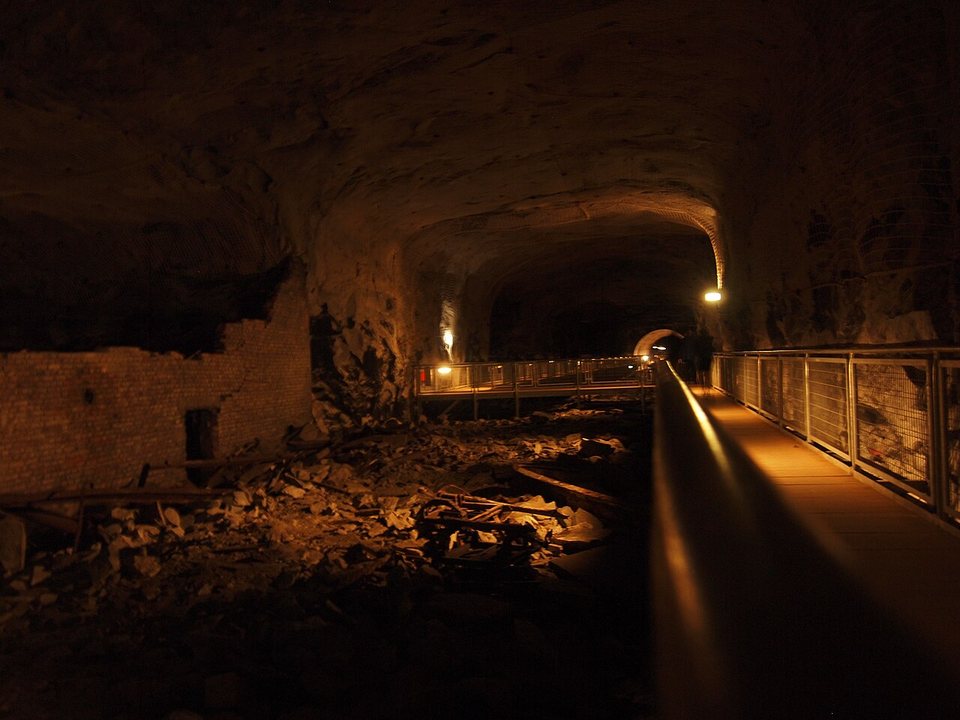
The V-2s were mass-produced underground, at a factory called the Mittelwerk, by prisoners from the Mittelbau-Dora concentration camp. About 20,000 prisoners died at the camp.5
More people died manufacturing the V-2 than were killed by its deployment.Wikipedia, "V-2 rocket"5
Von Braun admitted visiting the plant 12 to 15 times and called the conditions "repulsive." He said he never personally saw deaths or beatings, though by 1944 he knew deaths had occurred.3
Arthur Rudolph, another Paperclip recruit, had been operations director for V-2 production there.4
The Moon, and a reckoning
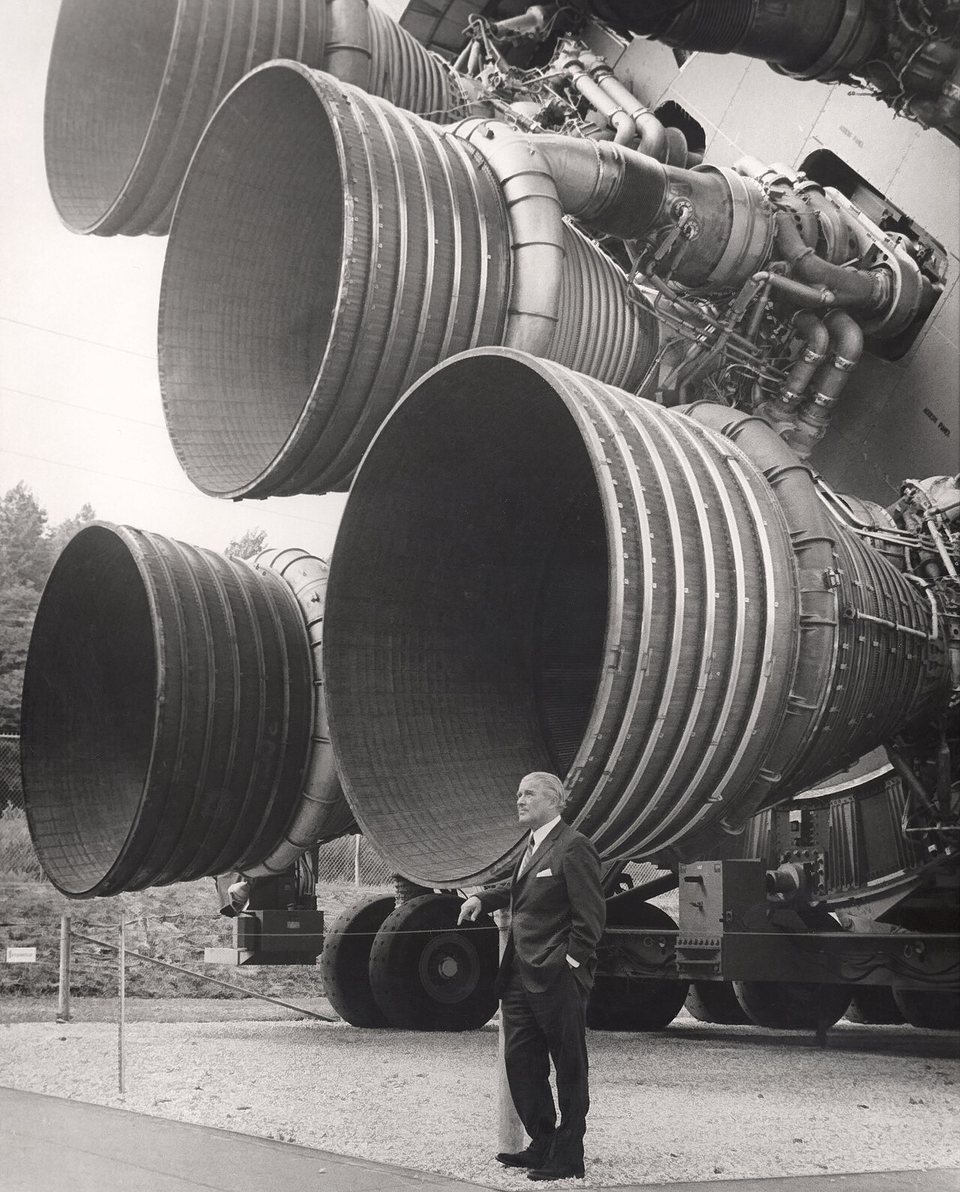
In 1960, von Braun became the first director of NASA's Marshall Space Flight Center. He was the chief architect of the Saturn V, the rocket that carried Apollo astronauts to the Moon.3 Rudolph was project director of the Saturn V program from 1963.4
In 1982, the Justice Department's Office of Special Investigations, which tracked Nazi war criminals, asked to interview Rudolph. In November 1983 he agreed to leave the U.S. and give up his citizenship in exchange for not being prosecuted. He left in March 1984. West German prosecutors later found no basis to charge him.4
Others faced late reckonings too. In 2013, the U.S. Air Force retired an award named for Hubertus Strughold, another Paperclip scientist, after reporting on his links to wartime human experiments.1
The paper trail
- May 2, 1945SurrenderVon Braun surrenders to U.S. forces in Austria.3
- Jul 20, 1945OvercastThe Joint Chiefs create the program that becomes Paperclip.1
- Sep 20, 1945First arrivalsThe first seven German rocket technicians reach the U.S.3
- Nov 1945PaperclipThe program gets its new name.1
- Aug 30, 1946The memoAcheson asks Truman to approve an expanded program.2
- Sep 3, 1946ApprovedTruman signs off in the margin.2
- Oct 1946The Soviet answerThe USSR moves more than 2,200 German specialists east in one night.1
- Apr 15, 1955CitizenVon Braun becomes a U.S. citizen.3
- Jul 1, 1960NASAVon Braun becomes the first director of Marshall Space Flight Center.3
- Mar 1984Rudolph leavesFacing a war crimes investigation, Rudolph leaves the U.S.4
- Oct 1, 2013Award retiredThe Air Force retires the Strughold Award.1
 Host
"They broke their own rule"
Read the order. No active Nazis, no more-than-nominal party members.2 Then look at who came. The program's most famous scientist was an SS major, and he misstated when he joined the party.3 A man who ran production in a factory where prisoners worked and died lived in America for nearly forty years before investigators caught up with him.4
And it wasn't only rocket men. One doctor brought over in 1951 was publicly accused of links to human experiments at a concentration camp, then left for Argentina "with the aid of the US military."1 When a government breaks its own rule in secret this often, you have to ask what's still in the files.
 Host
"Secret then, on the record now"
This is a file where the believers were right about the main fact, and the proof is in the government's own documents. The order is published, with the president's initials in the margin.2 The Justice Department investigated Rudolph, and he left the country.4 An Air Force award was retired.1
The reasons are in the record too. The Soviets were taking German scientists by the thousands.1 Paperclip's recruits helped put Americans on the Moon.3 You can decide the price was too high. But the history here isn't hidden. It's written down, and it's ugly in places.
Rex and June are characters written for this site and appear in every file. They are not real people. Their arguments come from the sources listed below.
Named after office supplies
The program's name came from the simplest possible system. Officers clipped a paperclip to the folders of the German experts they wanted.1
The scientists had a name for themselves too. At Fort Bliss, von Braun's team called themselves "PoPs": Prisoners of Peace.3
Was Operation Paperclip worth it?
On film
Videos about this file from other creators, picked to show more than one side. Tap a tape to play it.
Videos are made by their channels, not by Rumor & Record, and reflect their creators' views. They load from YouTube only when you tap play.
The file
Common questions
What was Operation Paperclip?
A secret U.S. government program, begun in 1945, that brought more than 1,600 German scientists and specialists to the United States to work on military and space research.
Did Operation Paperclip bring Nazis to America?
Yes. Although the 1946 policy excluded more-than-nominal Nazi Party members and active supporters of Nazism, recruits included former party members and SS officers, such as Wernher von Braun.
Why was it called Operation Paperclip?
Officers attached paperclips to the folders of the German experts they wanted to bring to the United States.
What happened to Arthur Rudolph?
The Saturn V project director agreed to leave the U.S. and renounce his citizenship in 1984 rather than face a war crimes investigation over V-2 production at the Mittelwerk. West German prosecutors later declined to charge him.
Other open files
Sources
- Operation Paperclip (Wikipedia)
- Memorandum by the Acting Secretary of State to President Truman, August 30, 1946 (Foreign Relations of the United States, U.S. Department of State)
- Wernher von Braun (Wikipedia)
- Arthur Rudolph (Wikipedia)
- V-2 rocket (Wikipedia)
Dyatlov Pass
In February 1959, nine hikers in the Ural Mountains cut their way out of their own tent and walked into the snow, some of them without shoes. None of them came back.
Open file 072Photo credits: Fort Bliss group photo (public domain); Mittelwerk tunnel, sockenhorst (CC0); von Braun with F-1 engines, NASA (public domain). Full list on the credits page.