
Stanford
Prison
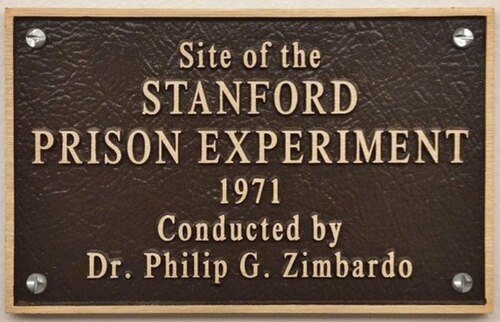
In August 1971, a Stanford professor turned a basement into a fake prison and split 18 young men into guards and prisoners. In six days, the story goes, the guards turned cruel and the prisoners broke down. It became one of the most famous studies in psychology. Then the tapes came out, and one of the prisoners said .12
Blacked-out lines in this case file can be declassified. Tap one.
Six things people say about the Stanford Prison Experiment. Some are on the record. Some are rumor, and one is a bit of both. Sort them, then see what the record says.
An ad in the paper
In 1971, Stanford psychology professor Philip Zimbardo placed an ad in the Palo Alto Times offering $15 a day for one to two weeks. Seventy-five people answered.1
He picked 24 he described as "the most stable (physically and mentally), most mature and least involved in anti-social behavior." A coin toss made them guards or prisoners, and the study started with nine of each.1
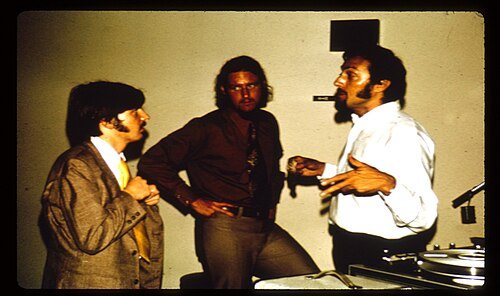
On Sunday, August 14, Palo Alto police arrived at the prisoners' homes and dorms, cuffed them and booked them on burglary and armed robbery charges. Then they were blindfolded and taken to three mock cells in the basement of Jordan Hall.1
Six days
Zimbardo didn't just watch. He played the prison's superintendent.5
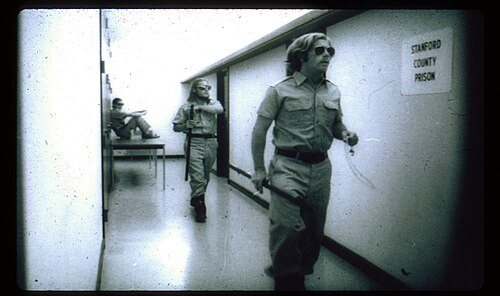
According to Zimbardo, five prisoners had to be released early because of "extreme emotional depression, crying, rage and acute anxiety."1
The end came after a visit from Christina Maslach, a recent Stanford psychology Ph.D. and Zimbardo's girlfriend. Zimbardo later wrote that of more than 50 outsiders who saw the prison, she was the only one who "questioned its morality." The study stopped on August 20.1
The tapes
For decades, the study was taught as proof that ordinary people turn cruel when given power. In 2018, that story started to come apart.1
French researcher Thibault Le Texier went through newly released documents in Zimbardo's archive at Stanford and called the experiment "one of the greatest scientific deceptions of the 20th century."3 Journalist Ben Blum found audio of researchers telling the guards to be "tough."2
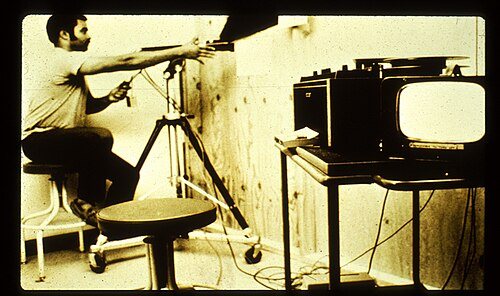
Prisoner Douglas Korpi said his famous breakdown was an act, to get out and study for the GRE.3 The guard nicknamed "John Wayne" said he had deliberately played a cruel guard, modeled on a film character.1 And Le Texier found that a student's term paper had rules nearly identical to the ones the guards supposedly invented on their own.4
Asked about Le Texier's book, Zimbardo said: "In a sense, I don't really care."2
The experiment comes back
Zimbardo died on October 14, 2024, at 91.5 In 2025, a sociology professor argued in Retraction Watch that the study should be retracted. The original journal no longer exists, he noted, so better textbooks may be the realistic fix.4
On October 21, 2026, Netflix released The New Stanford Prison Experiment, a six-episode reality series. Thirty volunteers were randomly split into guards and prisoners in a decommissioned section of a real Georgia jail.6
This time there was screening, a safe word, and psychologists and a medic on call around the clock. Its executive producer, Jane Lipsitz, said simply recreating the original "would be unconscionable."6
 Host
"It was a show, and they sold it as science"
The guards were told to be "tough." It's on tape.2 The most famous breakdown was faked by a student who wanted to go study.3 The most famous cruel guard says he was acting out a movie role.1 And the prison rules the guards supposedly came up with match a student's term paper from the same year.4
The results weren't even first published in a real psychology journal.2 A researcher who went through the archive called it "one of the greatest scientific deceptions of the 20th century."3 Asked about the book that exposed it, Zimbardo said he didn't really care.2 For fifty years, students were taught a staged performance as a fact about human nature.
 Host
"Flawed isn't the same as fake"
Some of what happened in that basement was real. Five prisoners were let out early, and the woman who visited was upset enough by what she saw to help end it.1 Zimbardo always said the guards were never told to be brutal.1 Even some of the study's critics don't call it a sham.1
The honest problem is that it can't prove much either way. Nine guards, nine prisoners and six days, with the lead researcher playing a role in the prison himself.15 That's a reason to stop treating it as proof of human nature, not a reason to treat everyone in it as an actor. Netflix's new version, with safeguards, shows the question it asked is still open.6
Rex and June are characters written for this site and appear in every case file. They are not real people. Their arguments come from the sources listed below.
The safe phrase nobody wrote down
Zimbardo said the prisoners always had a way out: a "safe" phrase, "I quit the experiment," that would get them released.3
When journalist Ben Blum checked the consent forms from August 1971, he found no mention of it. What the forms did say was that participants were expected to stay "for the full duration of the study."3
What was the Stanford Prison Experiment?
On film
Videos about this case file from other creators, picked to show more than one side. Tap a tape to play it.
Videos are made by their channels, not by Rumor & Record, and reflect their creators' views. They load from YouTube only when you tap play.
The case file
Common questions
Was the Stanford Prison Experiment fake?
Not entirely, but critics showed it was far less spontaneous than claimed. Recordings show guards were told to be "tough," one prisoner said he faked his breakdown, and a guard said he was acting. Zimbardo maintained the guards were never told to be brutal.
How long did the Stanford Prison Experiment last?
Six days, from August 14 to August 20, 1971. It was planned to last two weeks.
Who ended the Stanford Prison Experiment?
Christina Maslach, a recent Stanford psychology Ph.D. and Zimbardo's girlfriend at the time, objected after visiting, and the study was stopped on August 20, 1971.
What is The New Stanford Prison Experiment on Netflix?
A six-episode reality series released in October 2026, in which 30 screened volunteers are split into guards and prisoners in a decommissioned section of a Georgia jail, with psychologists on call.
Other open case files
Sources
- The Stanford Prison Experiment (History.com)
- One of psychology's most famous experiments was deeply flawed (Live Science, 2018)
- Time to dismiss the Stanford Prison Experiment? (Inside Higher Ed, 2018)
- Should Zimbardo's Stanford Prison Experiment be retracted? (Retraction Watch, 2025)
- Stanford psychologist behind the controversial Stanford Prison Experiment dies at 91 (GBH News, 2024)
- Netflix series inspired by Stanford Prison Experiment premieres Wednesday (The Stanford Daily, 2026)