Rumor & Record
The case for. The case against. You decide.
EVIDENCE Case open

Tartaria

Case no.064, Lost history
ClaimA lost empire built the world's grand old buildings, then history erased it
Exhibits4, from 1706 to 1915
Spread onlineSince about 2016

Look at a 300-year-old map of Asia and you'll find a huge country called Tartary. Look in a history textbook and you won't. To a growing online community, that gap is a crime scene. They believe Tartaria was a world empire that built the grand domes and columns of old cities, until a disaster they call buried it, and someone rewrote the history books.

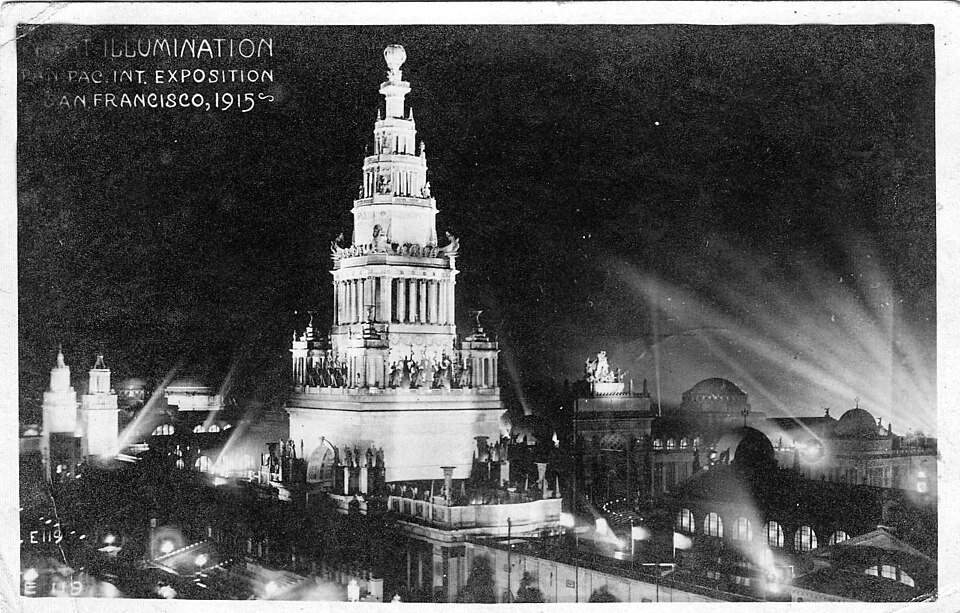
The Tower of Jewels at the 1915 Panama-Pacific International Exposition in San Francisco, lit up at night above a grand courtyard.
Exhibit 064-A The Tower of Jewels, San Francisco, 1915. It was demolished after the fair.Unknown photographer, public domain

Weigh the evidence

0 of 4 rated

Four pieces of evidence Tartaria believers point to most. Look at each one and give your first impression. Then read both explanations. You can change your answer any time.

CASE FILE 064CHAPTER 1

A name on the map

"Tartary" was what Europeans called a huge, loosely defined stretch of Asia, roughly Central Asia and Siberia. The name came from the Tatars, Turkic peoples of the region. The extra "r" seems to have come from confusing them with Tartarus, the underworld of Greek myth.1

One of the first maps devoted to it appeared in 1570, in the atlas of Abraham Ortelius, probably standing for the old Mongol empire.1 The 1771 Encyclopaedia Britannica described Tartary as "a vast country in the northern parts of Asia."6

By the late 1800s, mapmakers had replaced it with names like Turkestan, Mongolia and Siberia. No modern country has used the name.1

CASE FILE 064CHAPTER 2

From Moscow to the feed

The theory has an unlikely origin. In the 1970s and '80s, Russian mathematician Anatoly Fomenko published a "New Chronology" claiming much of world history had been misdated or invented. Russian nationalist writers built on it and presented Tartaria as Russia's real, hidden past.2

Around 2016, the idea crossed into English-language social media and changed shape. The Russian story dropped away. The new version focused on Western cities: their domes, columns and grand train stations.2

129,000+members in one Facebook group about the mud flood and Tartaria, as of 2024.

The online version has no single story. Different believers place the mud flood in different centuries and credit Tartaria with different buildings, from the pyramids to the U.S. Capitol.7

CASE FILE 064CHAPTER 3

Why it lands

In 2021, writer Zach Mortice called Tartaria "the QAnon of architecture."4 Critics see something real underneath it: many people look at a grand old train station, then at a glass box built last year, and ask why we stopped building beautiful things.4

Tartaria answers that question with a story. The buildings weren't ours. They belonged to someone better, and the truth was taken from us.

Illustrated portrait of Rex Marlowe, host of the believer case: a weathered man in a canvas field jacket.Host
Personnel file / Statement ARex MarloweThe believer caseHosted an overnight radio show about the unexplained for 20 years. Now he goes to the places in the files.

"Look up"

Walk through any old downtown and look above the shop signs. Domes, columns, carved stone, the same style on every continent. We're told the same people who couldn't build a decent road built palaces in two years for a fair, then knocked them down.4 Does that sound right to you?

And it's not just buildings. Map after map, for three hundred years, showed a huge country across Asia called Tartary.1 Then it vanished from the maps and from the textbooks. When something that big disappears, you're allowed to ask who erased it and why.

Illustrated portrait of June Okafor, host of the skeptic case: a woman in a blue work shirt holding manila folders.Host
Personnel file / Statement BJune OkaforThe skeptic caseSpent ten years as an insurance fraud investigator. Now she reads the original records so you don't have to.

"Every exhibit has a paper trail"

Pick any Tartaria exhibit and the records are there. The fair palaces were plaster over wood, built to last a season.5 Seattle raised its streets on purpose after a fire.8 Bastion forts come with centuries of engineering manuals.3 Tartary was a mapmaker's label for places Europeans had barely visited.1

The similar style isn't a mystery either. Architects in Europe and America copied the same classical models for generations. The theory survives by skipping the records and asking you to trust a feeling: that old things were too good to be ours.

Rex and June are characters written for this site and appear in every file. They are not real people. Their arguments come from the sources listed below.

THE STRANGEST PART

It started as a story about Russia

Today's Tartaria videos are mostly about American and European cities. But the idea began in Russia, as a nationalist history claiming Tartaria was Russia's true name and that the West had ignored it.2

In 2020, the Russian Geographical Society rejected the theory and published old maps of "Tartary" from its own collection to show what the name really meant.2

READER FINDINGCASE FILE 064

You've seen the exhibits. What was Tartaria?

Mark one box to see how other readers voted.

On film

Videos about this file from other creators, picked to show more than one side. Tap a tape to play it.

InnerVerse with Chance Garton2:47:58Watch on YouTube

Videos are made by their channels, not by Rumor & Record, and reflect their creators' views. They load from YouTube only when you tap play.

The file

What Tartary wasA European name for Central Asia and Siberia
On maps1570s to the late 1800s
Theory onlineSince about 2016
StatusNo record of a lost empire

Common questions

Was Tartaria a real place?

Tartary was a real name on European maps, used for Central Asia and Siberia from the 1500s to the late 1800s. It was a region, not an empire or a country with one government.

What is the mud flood?

The claim that a disaster in the 1800s buried the first floors of buildings worldwide. Believers point to windows below street level, which in places like Seattle were caused by streets being deliberately raised.

Why were world's fair buildings torn down?

They were built to be temporary, from wood frames covered in staff, a plaster that looked like stone. Most were demolished or burned after the fairs closed.

Where did the Tartaria theory come from?

From Russian alternative-history writers, starting with Anatoly Fomenko's "New Chronology." It spread on English-language social media from about 2016.

Other open files

Sources

  1. Tracking "Tartary" on Western Maps (Library of Congress, 2025)
  2. Tartarian Empire (Wikipedia)
  3. Bastion fort (Wikipedia)
  4. Inside architecture's wildest conspiracy theory (Bloomberg, 2021)
  5. 1893: Chicago and the World's Columbian Exposition (Newberry Library)
  6. Tartary, Encyclopaedia Britannica, 1st edition (1771) (Early Encyclopaedia Britannica project)
  7. Exploration Mysteries: Tartarian Empire (ExplorersWeb, 2024)
  8. Seattle Underground (Wikipedia)
044 / THE MONTAUK PROJECT NEXT FILE: SECRET EXPERIMENTS

The Montauk Project

A Cold War radar station at the tip of Long Island closed in 1981. A book published eleven years later said it hid time travel and mind control.

Open file 044

Photo credits: Tower of Jewels and South Gardens postcard (public domain); Delisle map (public domain); Bourtange aerial, NIMH (CC BY-SA 4.0); Seattle Underground, Mark Hursh (CC BY-SA 3.0). Full list on the credits page.