 Rumor & Record
Princess
Diana
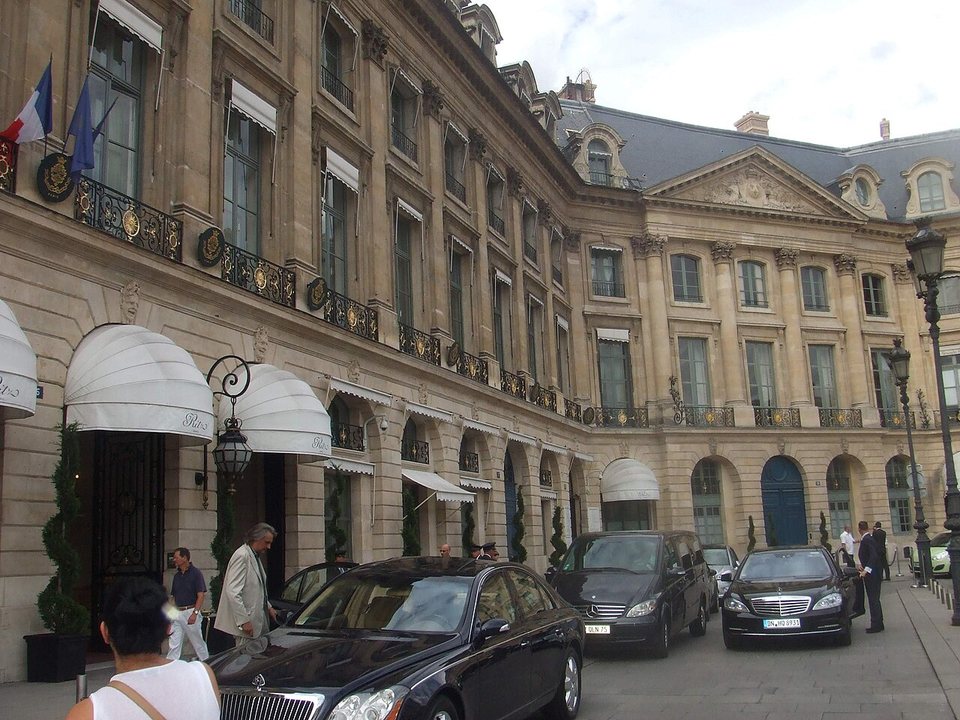
Just after midnight on August 31, 1997, a black Mercedes left the back door of the Ritz in Paris with photographers on its tail. Three minutes later it hit a concrete pillar in a riverside tunnel. Diana, Princess of Wales, died at a hospital a few hours later. To many people, it was .1
Follow the route
Stop 1 of 5The car's three-minute drive from the Ritz to the Alma tunnel, then the ambulance to the hospital. Tap a pin or step through in order.
Sketch only, not to scale. Route and times are from the French and British investigations as summarized in the sources.1
Three minutes
Diana and Dodi Fayed had spent the evening at the Ritz, which his father, Mohamed Al-Fayed, owned. To shake off the photographers waiting out front, a decoy car left from the main entrance. The couple slipped out the back.12
Their driver was Henri Paul, the hotel's deputy head of security. In the front passenger seat was Diana's bodyguard, Trevor Rees-Jones.1
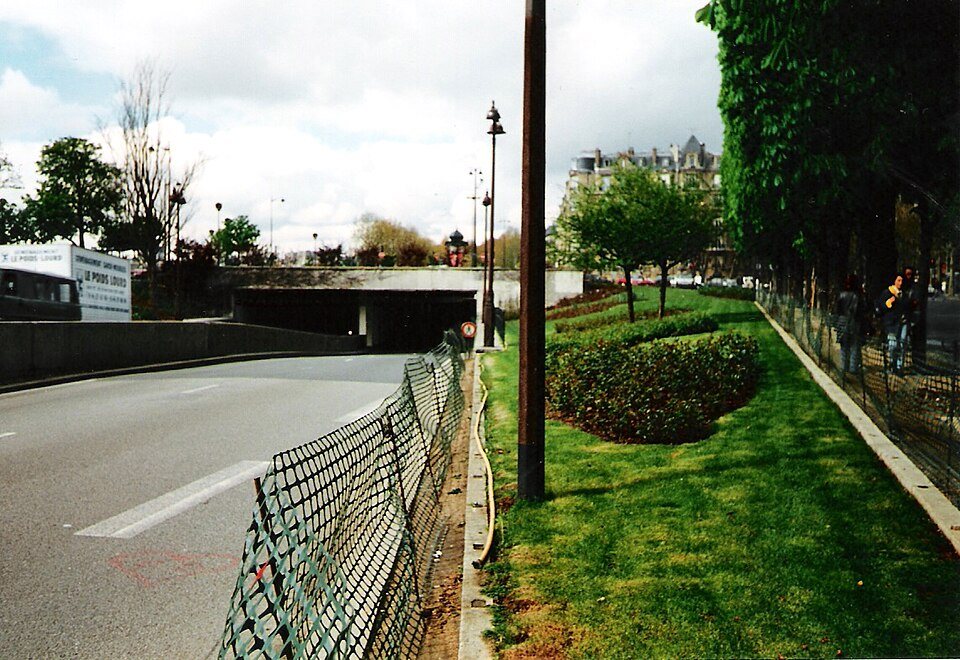
At 12:23 a.m., at the entrance to the Pont de l'Alma underpass, the car touched a white Fiat Uno, swerved left and struck the 13th pillar head-on.1
Dodi Fayed and Henri Paul died at the scene. Rees-Jones survived with serious injuries. Diana was taken to Pitié-Salpêtrière Hospital, where she died at 4:00 a.m.1
The driver
Tests on Henri Paul's blood found 180 milligrams of alcohol per 100 milliliters, 3.6 times the French legal limit. They also found antidepressants and traces of an anti-psychotic drug.1
Nobody in the car had been wearing a seatbelt.1
In 1999, after an 18-month investigation, French judges concluded that Paul, drunk and on prescription drugs, had lost control at high speed, and that he was responsible for the crash.1
A father's case
Mohamed Al-Fayed never accepted an accident. He said Diana was pregnant and about to marry his son, and that British intelligence, MI6, had arranged the crash. He blamed members of the royal family, including Prince Philip.2
Other claims piled up: a bright flash in the tunnel, a driver secretly working for intelligence, blood samples swapped, a former MI6 officer's story about a plan to blind a driver with a strobe light.2
Diana's former butler, Paul Burrell, later published a note he said she wrote in 1995, warning of a plan for "an accident" in her car: "brake failure and serious head injury."2
The British inquiries
London's Metropolitan Police opened Operation Paget in 2004 to test the murder claims. Its 832-page report, released in December 2006, concluded that the deaths were "the result of an accident."3
It examined the claims one by one. Tests found Diana was not pregnant. Investigators found no evidence of an engagement, no evidence that Henri Paul worked for any security service, and found that the flash "did not happen."23
A full inquest followed, with a jury, 93 days of hearings and 278 witnesses.4 On April 7, 2008, the jury found Diana and Dodi Fayed were unlawfully killed by the "grossly negligent driving" of the following photographers and of Henri Paul. It found that not wearing seatbelts contributed to the deaths.12
The coroner said Al-Fayed's claim that Prince Philip and MI6 had plotted the crash was "not based in any fact."4
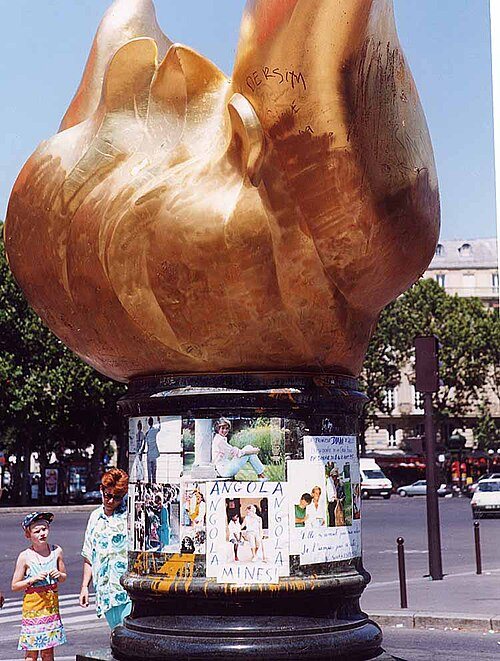
The timeline
- THE NIGHT
- 12:20 a.m.The couple leaves the Ritz by the rear door.
- 12:23 a.m.The Mercedes hits the 13th pillar of the Alma underpass.
- 12:26 a.m.The first emergency call is logged.
- 1:41 a.m.Diana's ambulance leaves the scene.
- 2:06 a.m.It arrives at Pitié-Salpêtrière Hospital.
- 4:00 a.m.Diana dies.
- THE INQUIRIES
- 1999French judges find the drunk, speeding driver responsible.
- Jan 2004Operation Paget begins in London.
- Dec 2006Paget's 832-page report: an accident.
- Oct 2007The inquest opens before a jury.
- Apr 7, 2008Verdict: unlawful killing by grossly negligent driving.
 Host
"Too many loose ends"
A white Fiat Uno touched the Mercedes in that tunnel. Its driver was never conclusively traced.1 There were more than a dozen cameras in and around the underpass, and not one recorded the crash.2 Diana's body was embalmed before the paperwork was done.2 And the coroner himself admitted a key DNA test on the driver's blood "was never done."2
Then there's the note. Two years before she died, Diana wrote that she feared "an accident" in her car: "brake failure and serious head injury."2 I'm not telling you who did it. I'm telling you that when the woman herself predicted it, "a drunk driver" is a lot to take on faith.
 Host
"The ordinary answer was enough"
The driver had three and a half times the legal limit of alcohol in his blood. The car was going about twice the speed limit into a tunnel, chased by photographers, and nobody was wearing a seatbelt.1 That's a crash, not a mystery.
Every murder claim was tested. Paget's detectives went through them and found nothing: no pregnancy, no engagement, no secret agent at the wheel, no flash.23 The former MI6 officer behind the strobe-light story later said he "could not remember specifically" what the document said.2 A jury heard 278 witnesses and blamed the driving.4
Rex and June are characters written for this site and appear in every file. They are not real people. Their arguments come from the sources listed below.
Fourteen cameras, no footage
In 2006, a British newspaper reported that there were more than 14 cameras in the Alma underpass area. None of them recorded the crash.2
French investigators found ten camera locations along the route, and none had relevant footage. The traffic camera's control unit had shut down at about 11 p.m. that night.2 For believers, it's the single most suspicious fact in the case. For investigators, it came down to a camera system that had shut down for the night.
What happened in the Alma tunnel?
On film
Videos about this file from other creators, picked to show more than one side. Tap a tape to play it.
Videos are made by their channels, not by Rumor & Record, and reflect their creators' views. They load from YouTube only when you tap play.
The file
Common questions
How did Princess Diana die?
She was fatally injured when the Mercedes she was in crashed into a pillar in the Pont de l'Alma underpass in Paris on August 31, 1997. She died at Pitié-Salpêtrière Hospital at 4:00 a.m.
Was Princess Diana murdered?
British police investigated the murder claims in Operation Paget and concluded the deaths were an accident. A 2008 inquest jury found she was unlawfully killed by the grossly negligent driving of the photographers following her car and of driver Henri Paul.
Was the driver drunk?
Tests found Henri Paul's blood alcohol was 3.6 times the French legal limit. Some people disputed the blood samples, but the inquest jury cited his drinking as a factor.
Was Diana pregnant when she died?
No. Tests reported to the inquiries found no sign of pregnancy, and investigators found no evidence of an engagement.
Other open files
Sources
- Death of Diana, Princess of Wales (Wikipedia)
- Conspiracy theories about the death of Diana, Princess of Wales (Wikipedia)
- Operation Paget (Wikipedia)
- Driver and paparazzi blamed for death of Diana (PinkNews, 2008)
Operation Paperclip
The man who built Hitler's V-2 rocket surrendered to American soldiers in 1945. Twenty-four years later, his rocket carried Americans to the Moon.
Open file 096Photo credits: Alma underpass, Erik1980 (CC BY-SA 3.0); Hôtel Ritz, Gzen92 (CC BY-SA 4.0); Diana in 1997, John Mathew Smith (CC BY-SA 2.0); Flame of Liberty, Adrian Pingstone (public domain). Full list on the credits page.