 Rumor & Record
Bay of
Pigs
On April 17, 1961, about 1,400 Cuban exiles trained by the CIA waded ashore on the swampy southern coast of Cuba. They expected air cover. Late the night before, the air strikes meant to protect them had been called off. Three days later .12
Follow the invasion
Stop 1 of 4Where the first air strikes hit, where the brigade landed, and where it ended. Tap a pin or step through in order.
Sketch only, not to scale. Places and times are from the record as summarized in the sources.1
Brigade 2506
The plan started under President Eisenhower. On March 17, 1960, the CIA presented a plan to overthrow Castro's government, and Eisenhower approved a budget of $13 million.1
Cuban exiles trained at a secret CIA base on Guatemala's Pacific coast. They named themselves Brigade 2506, after the membership number of a recruit who died in a training accident.16
In November 1960, a CIA task force concluded that the original concept was "unachievable." That assessment was never shared with John F. Kennedy, who became President two months later.3
The night before
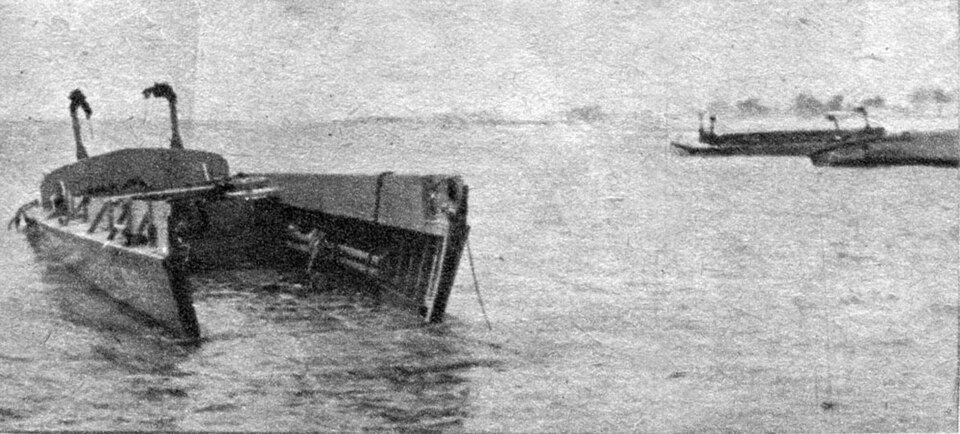
The first air strikes went in at about 6 a.m. on April 15: eight B-26 bombers flown by exile pilots, painted with false Cuban air force markings. They hit three airfields.1
The second round was meant to hit Castro's remaining planes on landing day. At about 9:30 p.m. on April 16, Kennedy's national security adviser, McGeorge Bundy, told the CIA's deputy director that the strikes could not launch the next morning.2
The CIA officials went to see Secretary of State Dean Rusk. He cited political considerations, especially at the United Nations. The decision to cancel, the CIA deputy director wrote later, "would stand."2
Three days on the beach
The brigade landed on April 17 at Playa Girón and Playa Larga.1 At 4:30 that morning, the CIA's deputy director went to Rusk's home to ask for fighter cover for the ships offshore. Rusk phoned the President. Afterward, he said "the request for air cover was disapproved."2
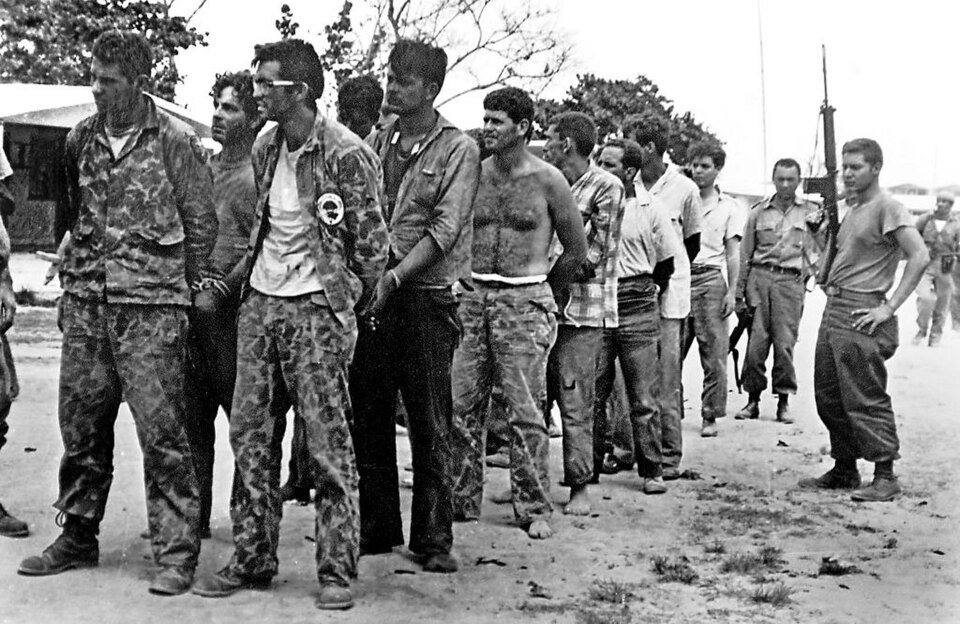
Castro's surviving planes went after the ships, and two supply ships were lost. Castro took personal command of the counterattack, and on April 20 the brigade surrendered.1
Who failed whom
Within months, CIA Director Allen Dulles was out. Kennedy decided it was time for him to go, and he resigned in November 1961.7
The CIA's own Inspector General studied the operation. His December 1961 report blamed the "failure at high levels to concentrate informed, unwavering scrutiny on the project."5 The agency's director had all but one copy burned. The surviving copy was released in 1998.4
A May 1961 report by Colonel Jack Hawkins blamed the cancelled air strikes instead, saying the decision "doomed the operation."3
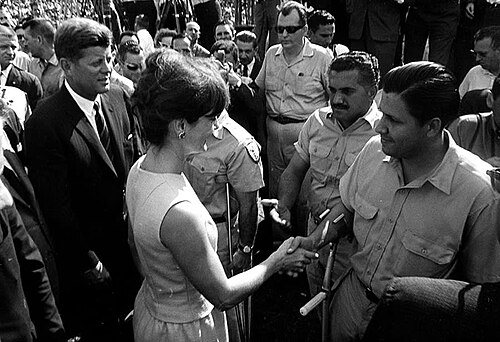
The prisoners came home in December 1962, in exchange for $53 million in food and medicine. On December 29, Kennedy welcomed them at the Orange Bowl in Miami.6
The timeline
- THE PLAN
- Mar 17, 1960Eisenhower approves a $13 million plan to overthrow Castro.
- Nov 1960A CIA task force calls the original concept "unachievable."
- Jan 1961Kennedy takes office.
- THE INVASION
- Apr 15, 1961B-26s in false Cuban markings hit three airfields.
- Apr 16, 9:30 p.m.The next morning's air strikes are called off.
- Apr 17, 4:30 a.m.A request for fighter cover for the ships is disapproved.
- Apr 17The brigade lands at Playa Girón and Playa Larga.
- Apr 20The brigade surrenders.
- AFTERWARD
- Nov 1961CIA Director Allen Dulles resigns.
- Dec 1961The CIA Inspector General's report blames the agency.
- Dec 1962Prisoners released for $53 million in food and medicine.
- 1998The last copy of the Inspector General's report is declassified.
 Host
"Somebody let them die"
The CIA's own task force decided the plan was "unachievable" months before the landing, and nobody told the new President.3 They sent 1,400 men anyway. Then, the night before the landing, Washington cancelled the air strikes that were supposed to clear the sky.2 When the ships begged for fighter cover, the answer was "disapproved."2
A colonel's report on the operation said the cancellation "doomed the operation."3 And when the CIA's inspector general wrote up what happened, the agency burned every copy but one.4 Either the planners set it up to fail and expected Kennedy to rescue it, or the White House pulled the rug out. Both ways, the men on the beach were expendable.
 Host
"No plot needed. Just bad decisions."
The record explains this without a setup. The CIA's own inspector general blamed a "failure at high levels to concentrate informed, unwavering scrutiny on the project."5 A 1998 report on its findings said officials knew early on that the secret had leaked and the mission was likely to fail, and that few of the case officers even spoke Spanish.4
The cancelled strikes were a real decision, made for a stated reason: political concerns, especially at the United Nations.2 That's a bad bet, not a betrayal. About 1,400 exiles landed against an army led by Castro himself.1 The invasion failed for the reasons failures usually do.
Rex and June are characters written for this site and appear in every case file. They are not real people. Their arguments come from the sources listed below.
Named for a dead man's number
Brigade 2506 sounds like a military unit number. It isn't.
In September 1960, a recruit named Carlos Rafael Santana died in a training accident. The exiles named their brigade after his membership number: 2506.6 The brigade's veterans association still uses the name, and runs a Bay of Pigs museum in Miami.6
Was the Bay of Pigs set up to fail?
On film
Videos about this case file from other creators, picked to show more than one side. Tap a tape to play it.
Videos are made by their channels, not by Rumor & Record, and reflect their creators' views. They load from YouTube only when you tap play.
The case file
Common questions
What was the Bay of Pigs invasion?
A failed April 1961 invasion of Cuba by about 1,400 Cuban exiles trained and directed by the CIA, meant to overthrow Fidel Castro. The brigade surrendered after three days.
Why did the Bay of Pigs fail?
The CIA's own Inspector General blamed the agency's planning and oversight. Others blame the Kennedy administration's decision to cancel air strikes the night before the landing.
Did Kennedy cancel air support at the Bay of Pigs?
Air strikes planned for the morning of the landing were called off on the night of April 16, 1961, and a request for fighter cover for the ships was disapproved after Secretary of State Rusk spoke with the President.
What happened to the prisoners?
More than 1,100 were captured. They were released in December 1962 in exchange for $53 million in food and medicine, and Kennedy welcomed them at the Orange Bowl in Miami.
Other open case files
Sources
- Bay of Pigs Invasion (Wikipedia)
- Memorandum From the Deputy Director of the CIA (Cabell) to General Maxwell D. Taylor, May 9, 1961 (Foreign Relations of the United States, U.S. Department of State)
- CIA sued for 'holding history hostage' on Bay of Pigs invasion (National Security Archive, 2011)
- Secret CIA report on the Bay of Pigs (Voice of America, 1998)
- Bay of Pigs: 40 years after (National Security Archive, 2001)
- Brigade 2506 (Wikipedia)
- The 'Confessions' of Allen Dulles: New Evidence on the Bay of Pigs (Diplomatic History, 1984)
The CIA Plots to Kill Castro
Poison pills, the Mafia and a pen with a needle in it. A Senate committee confirmed five years of plots to kill Fidel Castro.
Open case file 082Photo credits: Brigade 2506 landing craft (public domain); captured brigade members, Miguel Viñas (public domain); Kennedy at the Orange Bowl, Cecil Stoughton (public domain). Full list on the credits page.