 Rumor & Record
MEMORANDUM / FILE 061
Who Killed
Dr. King?
On April 4, 1968, Dr. Martin Luther King Jr. stepped onto the balcony of the Lorraine Motel in Memphis and was shot dead. James Earl Ray pleaded guilty and then spent the rest of his life saying he was set up. Thirty-one years later, a Memphis jury agreed that King was killed by a conspiracy, one that included .32
Declassify the review
0 of 6 declassifiedIn June 2000, the Justice Department published its answer to the conspiracy claims. These lines from its conclusions are exact. We blacked out key words. Tap each bar to declassify it.
VIII. After reviewing all available materials from prior official investigations and other sources, including the evidence from King v. Jowers, and after conducting a year and a half of original investigation, we have concluded that the allegations originating with Loyd Jowers and Donald Wilson are .
VIII. We found no reliable evidence to support Jowers' allegations that he conspired with others to shoot Dr. King .
VIII. Rather, it appears that Jowers of a plot to kill Dr. King.
VIII. The weight of the evidence available to our investigation also establishes that .
VII.D. The verdict presented by the parties and adopted by the jury is , much of which the jury never heard.
VIII. We recommend no further federal investigation of the Jowers allegations, the Wilson allegations, or any other allegations related to the assassination .
Source: U.S. Department of Justice, Civil Rights Division, Investigation of Recent Allegations Regarding the Assassination of Dr. Martin Luther King, Jr., June 2000. A U.S. government document in the public domain.1
The balcony
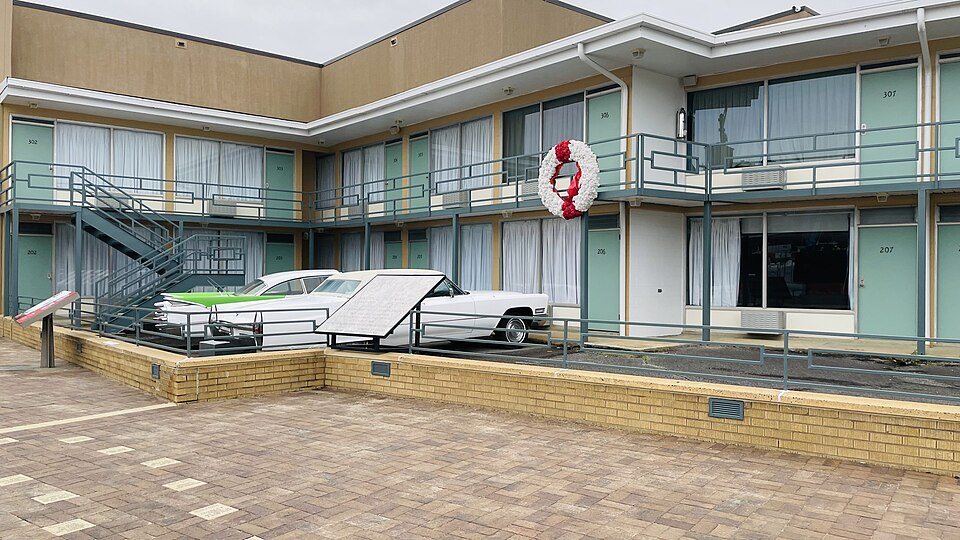
On April 4, 1968, King was standing on the second-floor balcony outside room 306 of the Lorraine Motel in Memphis, Tennessee. The night before, he had given his "I've Been to the Mountaintop" speech.3
He was shot and killed. The back of a boarding house where a man named James Earl Ray had taken a room faced the motel across Mulberry Street.3
The plea
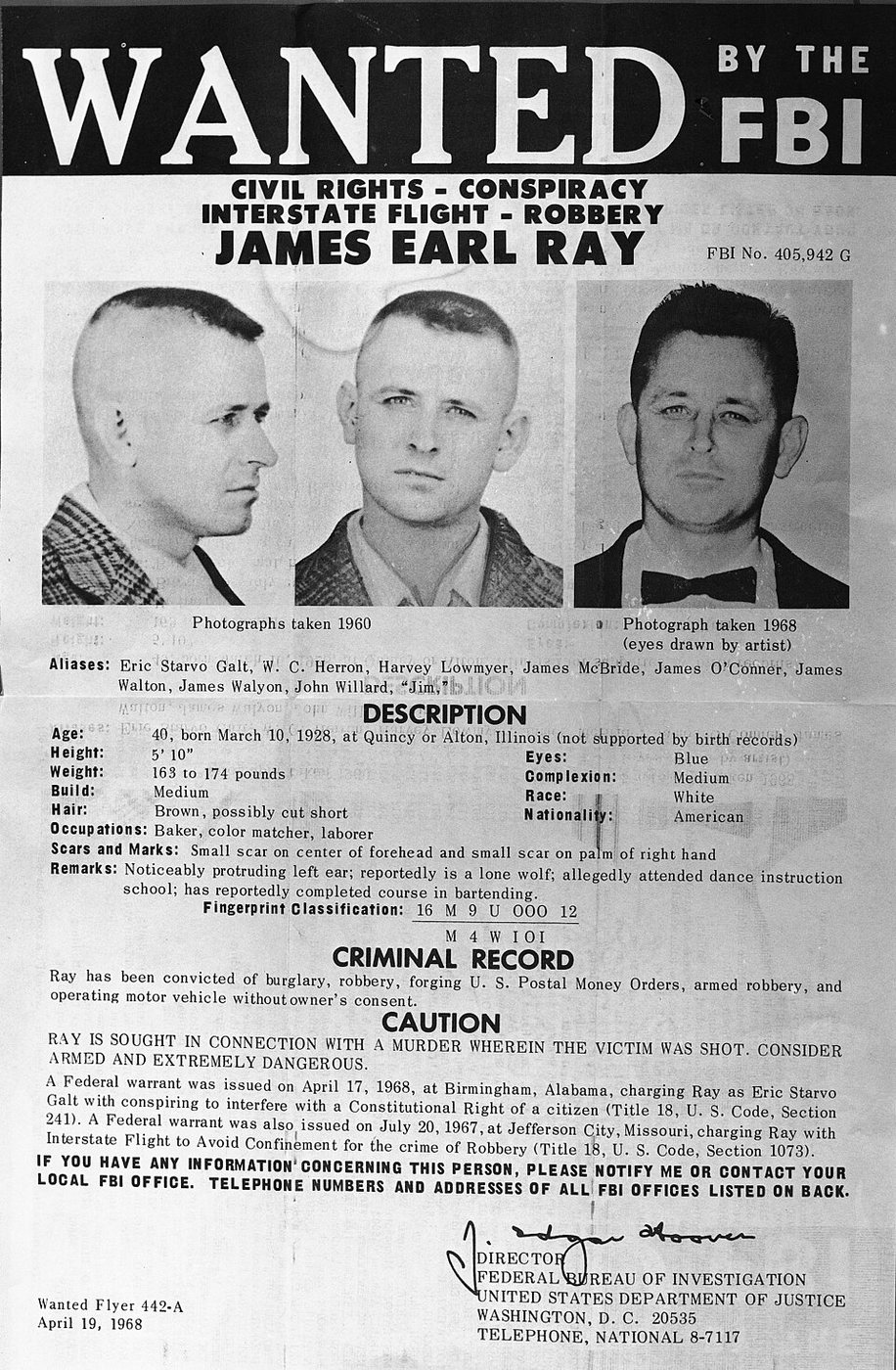
Ray got a Canadian passport and fled. He was arrested in London on June 8, 1968.3
On March 10, 1969, he pleaded guilty and was sentenced to 99 years, avoiding a trial. Within days, he took back his plea and said he was innocent. A man he knew only as "Raoul," he said, had told him to buy the rifle.3
He maintained his innocence for the rest of his life, and died in prison in 1998.3
The FBI's other file
Long before the shooting, King was a target of the FBI. The bureau watched him from the time of the 1956 Montgomery bus boycott and began wiretapping him in 1963.3
Shortly before King accepted the Nobel Peace Prize in 1964, the FBI mailed him an anonymous letter that warned: "your end is approaching."3
For many people, that history is why the official story has never been enough.
Two juries, two answers
In 1979, the House Select Committee on Assassinations "concluded that there was a likelihood of conspiracy in the assassination of Dr King." It also said: "No federal, state or local government agency was involved."3
The King family came to believe Ray was innocent. In 1997, King's son Dexter met Ray in prison and told him: "I believe you and my family believes you."3
In 1999, the family sued Loyd Jowers. A Memphis jury unanimously found a conspiracy, and the family was awarded the $100 it had asked for.3 In 2000, the Justice Department reviewed the claims and rejected them.1
In July 2025, more than 230,000 files on the assassination were released. King's children Martin Luther King III and Bernice King said they "support transparency and historical accountability" and asked that the files be read "within their full historical context."4
The paper trail
- Apr 4, 1968AssassinationKing is shot on the Lorraine Motel balcony.3
- Jun 8, 1968ArrestJames Earl Ray is arrested in London.3
- Mar 10, 1969Guilty pleaRay pleads guilty and gets 99 years. He recants within days.3
- 1979House committeeFinds a "likelihood of conspiracy," with no government agency involved.3
- Dec 1993TelevisionLoyd Jowers claims on ABC that he joined a plot.2
- 1997Prison visitDexter King meets Ray and tells him he believes him.3
- 1998Ray diesRay dies in prison, never having had a trial.3
- Aug 26, 1998DOJ reviewThe Attorney General orders a new investigation.2
- Dec 1999Civil verdictA Memphis jury finds a conspiracy. The King family gets $100.3
- Jun 2000DOJ reportThe Justice Department finds the claims not credible.1
- Jul 21, 2025Files releasedMore than 230,000 files are made public.4
 Host
"A jury heard it and said conspiracy"
Start with who was after King. The FBI watched him for twelve years, tapped his phones and mailed him a letter saying "your end is approaching."3 Then the man who pleaded guilty took it back within days and said for thirty years that he was innocent.3
Congress itself found a "likelihood of conspiracy."3 In 1999, a Memphis jury heard the King family's case and unanimously found a conspiracy that included government agencies.3 And the people who knew King best, his own family, believe the man in prison didn't do it.3
 Host
"A plea, a review, and a story that fell apart"
Ray pleaded guilty.3 The congressional committee that found a possible conspiracy also found that "no federal, state or local government agency was involved."3 The FBI's ugly treatment of King is real, but it isn't evidence that the FBI killed him.
The 1999 verdict came from a civil case where, the Justice Department said, the jury adopted a verdict "presented by the parties" and never heard much of the relevant evidence.1 The main witness, Jowers, contradicted his own accounts, and the department concluded he "contrived and promoted a sensational story."1
Rex and June are characters written for this site and appear in every file. They are not real people. Their arguments come from the sources listed below.
A conspiracy verdict for $100
When the King family won its civil case in 1999, it didn't ask for millions. It asked for $100, and that's what the jury awarded.3
The man the jury found responsible, Loyd Jowers, was a former Memphis tavern owner who had first told his story on national television six years earlier.2
Who killed Dr. King?
On film
Videos about this file from other creators, picked to show more than one side. Tap a tape to play it.
Videos are made by their channels, not by Rumor & Record, and reflect their creators' views. They load from YouTube only when you tap play.
The file
Common questions
Who killed Martin Luther King Jr.?
James Earl Ray pleaded guilty in 1969 and was sentenced to 99 years. He recanted within days, and the King family later came to believe he was innocent.
What was the King v. Jowers verdict?
In 1999, a Memphis civil jury found that King was killed by a conspiracy involving Loyd Jowers and others, including government agencies. The family received the $100 in damages it requested.
What did the Justice Department conclude?
In June 2000, the Justice Department found the allegations from Loyd Jowers and Donald Wilson "not credible" and recommended no further federal investigation without reliable new facts.
Did the FBI spy on Martin Luther King?
Yes. The FBI kept King under surveillance, wiretapped him from 1963, and in 1964 mailed him an anonymous threatening letter.
Other open files
Sources
- Investigation of Recent Allegations Regarding the Assassination of Dr. Martin Luther King, Jr.: Conclusions (U.S. Department of Justice, 2000)
- Investigation of Recent Allegations: Introduction (U.S. Department of Justice, 2000)
- Martin Luther King Jr. assassination conspiracy theories (Wikipedia)
- Trump administration releases trove of files on Martin Luther King Jr. assassination (NPR via WRVO, 2025)
Roswell
In 1947 the Army announced it had a flying disc. A day later it was a weather balloon. In 1994, the Air Force admitted that was a cover story too.
Open file 047Photo credits: Lorraine Motel, Hectordej7544 (CC BY-SA 4.0); James Earl Ray wanted poster, FBI (public domain); Dr. King, Marion S. Trikosko (public domain). Full list on the credits page.